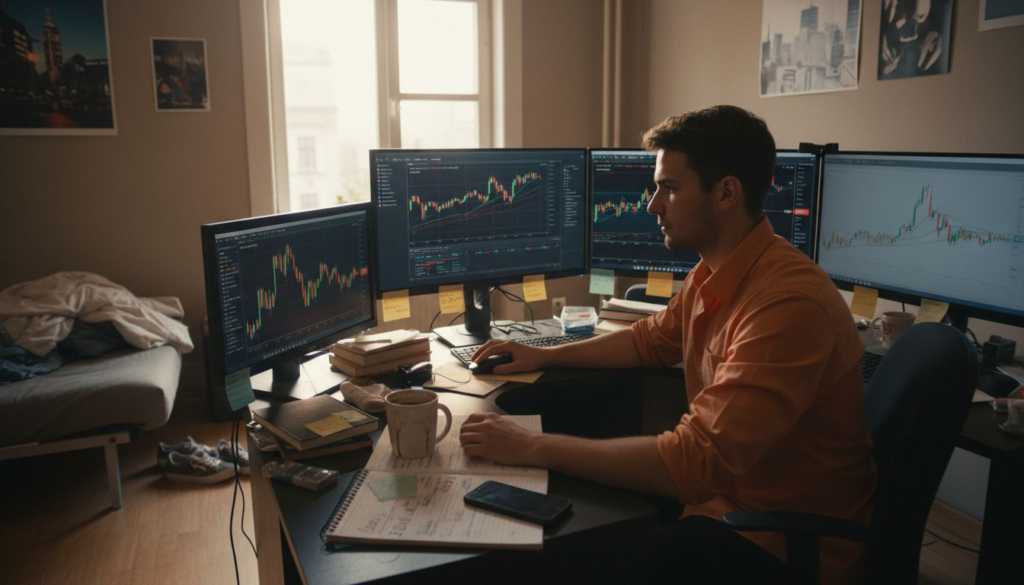

Most retail traders believe that finding the perfect technical setup or catching lucky market moves will make them profitable. The truth is far simpler and more challenging: trading discipline is the single most important factor separating consistent winners from chronic losers. Without the ability to follow your plan, manage emotions, and execute setups consistently, even the best analysis becomes worthless. This article reveals what trading discipline actually means, why it’s so difficult to maintain, and exactly how you can develop it to achieve consistent profits in FX, indices, and crypto markets.
Table of Contents
- What Is Trading Discipline?
- The Psychology Behind Trading Discipline
- Developing And Maintaining Trading Discipline
- Common Pitfalls And How To Avoid Them
- Take Your Trading Discipline To The Next Level With DayProp
Key takeaways
| Point | Details |
|---|---|
| Discipline drives profitability | Following your trading plan consistently leads to 20-30% higher win rates and better risk-adjusted returns. |
| Emotions sabotage success | Fear, greed, and FOMO trigger impulsive decisions that destroy otherwise solid trading strategies. |
| Structured plans reduce mistakes | A detailed trading plan with clear entry, exit, and risk rules eliminates guesswork and emotional interference. |
| Journaling reveals blind spots | Recording and reviewing trades improves performance metrics by 10-15% within six months by exposing behavioral biases. |
| Consistency beats perfection | Disciplined execution of an average strategy outperforms perfect analysis with inconsistent follow-through. |
What is trading discipline?
Trading discipline is the consistent adherence to a predefined trading plan, encompassing risk management, emotional control, and process-oriented execution. It means following your rules regardless of how you feel, what the market just did, or what other traders are saying. Discipline isn’t about being right on every trade. It’s about executing your edge consistently enough that probabilities work in your favor over time.
The components of trading discipline include three critical elements. First, risk management means never risking more than your plan allows per trade, regardless of conviction. Second, emotional control requires you to recognize fear, greed, and FOMO without letting them dictate your actions. Third, setup execution means taking only trades that match your criteria, even when markets tempt you with seemingly obvious opportunities.
The quantified benefits are significant. Studies show disciplined traders have 20-30% higher win rates and 15-25% better risk-adjusted returns compared to undisciplined peers trading the same strategies. This edge compounds dramatically over months and years, turning marginal systems into profitable ones and good systems into exceptional ones.
Consistency matters far more than perfection. You will take losing trades. You will miss opportunities. You will occasionally break your rules. What separates profitable traders from losers is the ability to return to disciplined execution quickly rather than spiraling into emotional trading. Your trading accounts discipline profitability connection becomes obvious once you track performance honestly.
Key discipline markers include:
- Taking every valid setup without hesitation or second-guessing
- Cutting losses at predetermined stops without hoping for reversals
- Taking profits at targets without greed-driven extensions
- Sitting on hands when no valid setups exist
- Maintaining position sizing rules regardless of recent results
Discipline separates traders who consistently extract profits from markets from those who repeatedly give money back through impulsive, emotional decisions. It transforms trading from gambling into a systematic business with measurable edge and predictable outcomes.
The psychology behind trading discipline
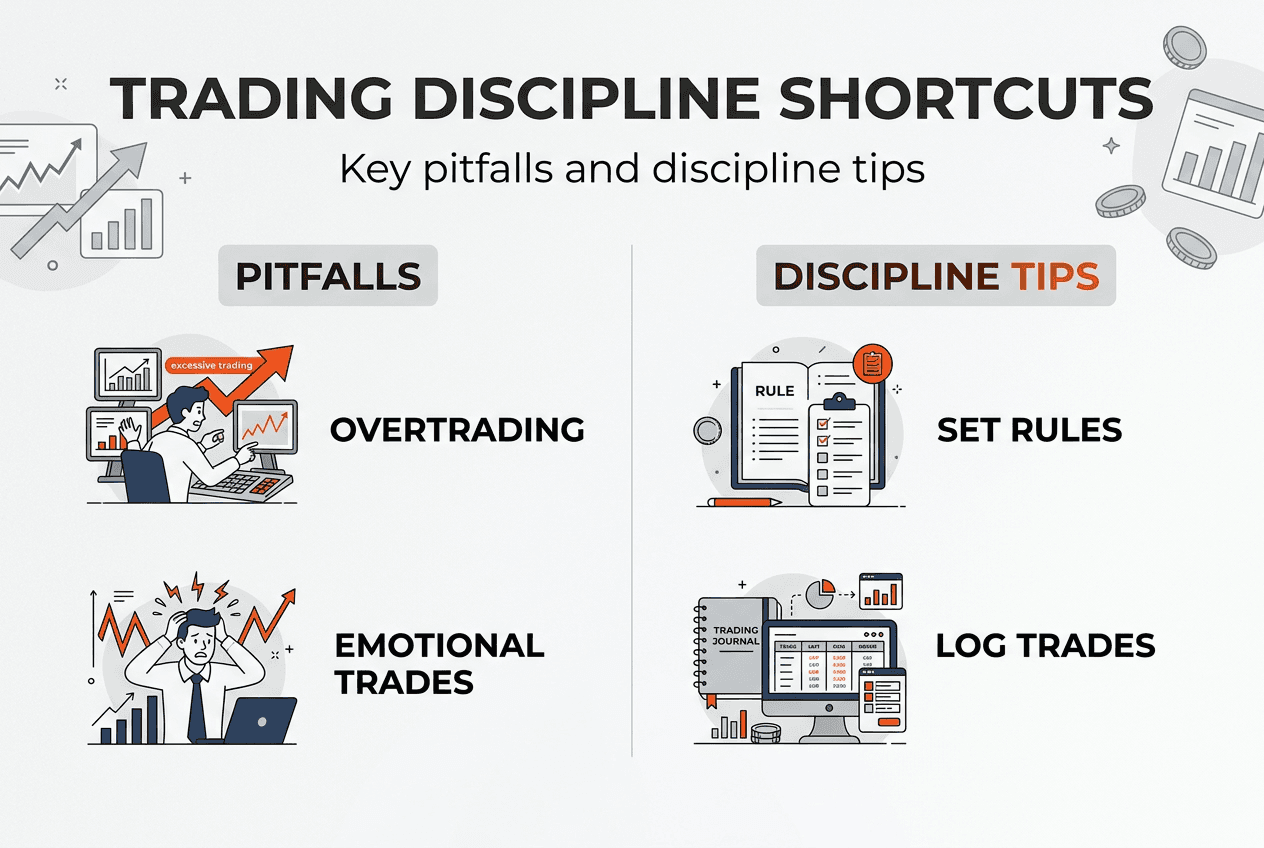
Traders face intense emotional triggers that make discipline extraordinarily difficult to maintain. Fear paralyzes you from taking valid setups after losses. Greed pushes you to overtrade or hold winners too long. FOMO makes you chase breakouts that already moved. Revenge trading after losses causes you to abandon rules completely in desperate attempts to recover quickly.

Loss aversion causes losses to hurt twice as much as equal gains please, creating asymmetric emotional responses that impair objective decision-making. This psychological reality means a $500 loss feels far worse than a $500 win feels good, creating emotional debt that accumulates and eventually explodes into undisciplined behavior. The pain of losing overrides rational analysis, causing you to exit winning trades early while holding losing trades too long.
Emotional trading manifests in predictable patterns. Overtrading happens when you force setups that don’t exist because sitting idle feels uncomfortable. Analysis paralysis strikes when fear prevents execution despite valid signals. Impulsive entries occur when FOMO overrides your plan. Moving stops to avoid losses destroys risk management. Each emotional decision compounds, creating cycles of poor performance that erode confidence and worsen discipline further.
The statistics are sobering. 70% of retail traders lose money due to emotional decision-making and poor risk management, not because their strategies are fundamentally flawed. Most losing traders actually have decent analysis skills. They fail because they cannot execute their edge consistently when emotions surge.
Building self-trust requires consistent behavior over time. Every time you follow your plan despite fear, you deposit credibility into your psychological account. Every time you break rules impulsively, you withdraw that credibility. Eventually, you either trust yourself to execute discipline or you don’t. That self-trust determines whether you can scale capital and achieve trading habits for consistent profits in fx and crypto markets.
Common emotional triggers include:
- Consecutive losses creating fear of the next trade
- Big wins generating overconfidence and reckless position sizing
- Missing a major move causing FOMO on the next setup
- Slow trading periods triggering boredom and forced entries
- Comparing your results to other traders on social media
Pro Tip: Acknowledge that discipline is hard precisely because no external force enforces your rules. Unlike a job where a boss monitors performance, trading offers complete freedom. That freedom becomes a curse without internal discipline systems.
“Discipline is the bridge between goals and accomplishment.” – Jim Rohn
The bridge analogy captures the essence perfectly. Your goals exist on one side, your current reality on the other. Discipline is the only structure connecting them. Without it, goals remain fantasies regardless of how much you want them or how good your analysis becomes.
Developing and maintaining trading discipline
Create a detailed, written trading plan that removes ambiguity from every decision. Your plan must specify exact entry criteria, exit rules for both wins and losses, position sizing formulas, maximum daily loss limits, and conditions under which you stop trading. Vague intentions like “trade breakouts” or “manage risk” provide zero discipline framework. Lack of a structured trading plan is a primary reason for failure among new traders who otherwise possess solid analytical skills.
Establish a pre-market routine that prepares your mindset for disciplined execution. Consistency in preparation creates consistency in performance. Your routine might include reviewing your plan, analyzing key levels, checking economic calendars, and setting alerts. The specific activities matter less than doing them identically every trading session, creating neural pathways that trigger disciplined states automatically.
Use trade journaling and performance analysis to review behavior objectively rather than emotionally. Trade journaling improves trading metrics by 10-15% within six months by revealing behavioral biases you cannot see in real time. Record not just trade details but your emotional state, why you took each trade, and whether you followed rules completely. Patterns emerge quickly when you review weekly.
Follow this discipline-building routine:
- Write your complete trading plan including every rule and contingency before risking capital
- Trade the plan on demo or micro accounts until you execute it perfectly for 30 consecutive trading days
- Start live trading with minimum position sizes, focusing entirely on rule adherence rather than profits
- Review every trade in your journal within 24 hours, noting rule compliance and emotional triggers
- Scale position sizes only after proving consistent discipline over 90 days of live trading
This progression might feel slow, but it builds the foundation for role of structured trading boost discipline and funding success. Rushing this process guarantees you’ll blow accounts through undisciplined trading before developing the skills to manage larger capital.
Pro Tip: Accept that perfection is impossible. You will break rules occasionally. The goal is catching violations quickly and returning to disciplined execution rather than spiraling into emotional trading that destroys weeks of progress in hours.
| Discipline Metric | Beginner Target | Intermediate Target | Advanced Target |
| — | — | — |
| Rule Compliance Rate | 70-80% | 85-92% | 95%+ |
| Emotional Trades per Week | 3-5 | 1-2 | 0-1 |
| Journal Completion Rate | 80% | 95% | 100% |
| Days Following Plan | 15/30 | 25/30 | 28/30 |
These benchmarks provide concrete goals for measuring discipline improvement over time. Track them monthly to identify whether you’re progressing or stagnating. Honest self-assessment separates traders who improve from those who repeat the same mistakes indefinitely.
Implementing proper manage risk trading consistent profits 2026 strategies requires discipline to execute when emotions scream otherwise. Risk management rules only work if you follow them on every trade, especially when recent wins tempt you to increase size or recent losses pressure you to recover quickly.
Common pitfalls and how to avoid them
Common pitfalls include emotional trading, overtrading, revenge trading, and failing to adapt to changing market conditions. Each pitfall stems from specific psychological triggers that override disciplined behavior. Understanding these traps helps you recognize them before they destroy your account.
| Pitfall | Undisciplined Behavior | Disciplined Alternative |
|---|---|---|
| Overtrading | Taking 15-20 mediocre setups daily because sitting idle feels uncomfortable | Taking 2-3 high-probability setups weekly that match exact criteria |
| Revenge Trading | Doubling position size after losses to recover quickly | Maintaining consistent position sizing regardless of recent results |
| Moving Stops | Adjusting stop losses to avoid taking losses | Accepting losses at predetermined stops without hesitation |
| FOMO Entries | Chasing breakouts after significant moves already occurred | Waiting patiently for pullbacks to planned entry zones |
Overtrading destroys profitability faster than almost any other mistake. It increases transaction costs, forces low-probability setups, and guarantees you’ll be in positions when unexpected volatility strikes. Discipline means accepting that most market hours offer no valid opportunities for your specific strategy. Professional traders might execute only 5-10 trades weekly while undisciplined amateurs take that many daily.
Revenge trading after losses represents pure emotional hijacking of your process. The desperate need to recover losses immediately causes position sizing violations, strategy abandonment, and impulsive entries on any setup that might work. This behavior typically turns manageable losses into account-destroying drawdowns. Discipline helped a hedge fund navigate the 2008 financial crisis successfully while undisciplined competitors collapsed.
Failing to adapt creates a different discipline challenge. Markets change character regularly. Strategies that worked brilliantly in trending conditions fail miserably in choppy ranges. Discipline doesn’t mean rigidly following a plan when conditions clearly invalidate it. It means having predetermined criteria for recognizing regime changes and adjusting systematically rather than impulsively.
Premature stop losses happen when you exit positions before stops trigger because you cannot tolerate the emotional discomfort of watching unrealized losses. This behavior guarantees you take maximum losses while missing winners that would have worked. Your stop placement already accounts for normal volatility. Exiting early means you planned poorly or lack the discipline to execute properly.
Avoidance tactics include:
- Set maximum trade limits per day and week to prevent overtrading
- Implement mandatory breaks after losses before taking the next trade
- Use alerts rather than watching charts constantly to reduce impulsive entries
- Review your plan before every trade to ensure the setup qualifies
- Track rule violations separately from trade results to measure discipline independently
Pro Tip: Develop flexibility within your discipline framework by defining specific conditions that warrant plan adjustments. This prevents rigid adherence when markets clearly change while avoiding impulsive modifications based on emotions.
Your trading account growth disciplined approach determines whether you scale successfully or repeatedly blow accounts. Discipline compounds gains while limiting losses, creating the asymmetric risk-reward profile that defines professional trading.
Take your trading discipline to the next level with DayProp
Developing trading discipline in isolation is challenging. DayProp offers structured evaluation programs that reward disciplined trading while identifying and correcting undisciplined behaviors before they destroy your capital. Our performance-based trading evaluation process guide provides step-by-step frameworks tailored for FX, indices, and crypto traders seeking to prove their edge and secure funding.
Our evaluation challenges emphasize consistency, risk management, and rule adherence over short-term profits. This structure forces you to develop genuine discipline rather than gambling behavior that occasionally produces lucky results. Following our trading evaluation guide secure prop funding helps you set clear trading objectives while implementing risk management systems that professional traders use daily. Achieve the consistency required to unlock prop funding and grow your trading capital without risking personal savings. Our transparent rules and professional risk parameters create the framework within which discipline flourishes, transforming talented but inconsistent traders into funded professionals.
FAQ
What are the main benefits of developing trading discipline?
Discipline increases win rates by 20-30% and improves risk-adjusted returns by 15-25% compared to emotional trading. It transforms inconsistent results into predictable profitability by ensuring you execute your edge consistently. Strong discipline also reduces stress because you trust your process rather than hoping each trade works, creating sustainable trading accounts discipline profitability over years.
How long does it typically take to build strong trading discipline?
Most traders require 6-12 months of consistent practice to develop reliable discipline, though this varies based on trading frequency and commitment to journaling. The key is trading small enough that emotions don’t overwhelm your process while building the neural pathways that make disciplined behavior automatic. Rushing this development by trading larger sizes before discipline solidifies guarantees failure.
Can journaling really improve trading discipline and performance?
Yes, trade journaling improves metrics by 10-15% within six months by exposing behavioral patterns you cannot recognize in real time. Recording emotional states, rule compliance, and decision-making processes reveals biases that sabotage performance. The act of reviewing trades objectively creates accountability that strengthens discipline naturally, making violations less frequent over time.
How do I avoid common emotional traps like revenge trading or FOMO?
Implement mandatory breaks after losses before taking the next trade, giving emotions time to settle. Set maximum daily trade limits to prevent overtrading when FOMO strikes. Use alerts instead of watching charts constantly, reducing impulsive entries. Most importantly, develop trading habits for consistent profits in fx and crypto that include pre-trade checklists ensuring every setup matches your criteria before execution.
Is it possible to be disciplined and still adapt to changing market conditions?
Absolutely. Discipline means following your plan, but your plan should include criteria for recognizing regime changes and adjusting systematically. Define specific conditions that warrant strategy modifications, such as volatility thresholds or correlation breakdowns. This prevents rigid adherence when markets clearly change while avoiding impulsive adjustments based on emotions. Disciplined adaptation uses predetermined rules rather than reactive impulses.
Recommended