
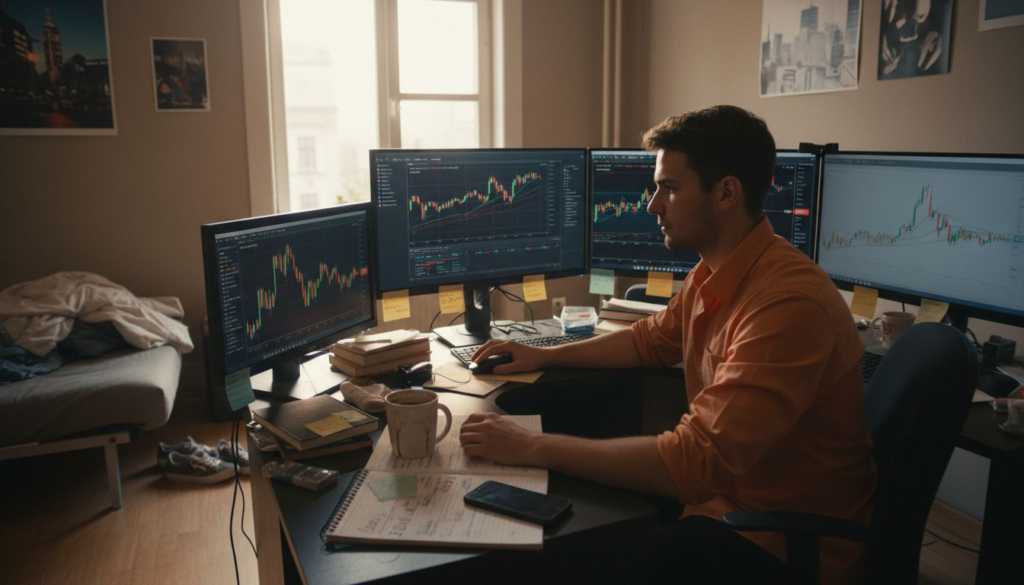
Jumping into forex and crypto trading without a plan can leave you vulnerable to big losses and unpredictable results. Markets move fast and emotions often take over, leading to missed opportunities or costly mistakes. The solution lies in building a structured, disciplined approach to every trade you make.
This guide will give you practical, actionable steps to replace chance with consistency and emotion with logic. Each strategy is chosen to help you protect your capital, make clear decisions, and grow as a trader. Get ready to discover proven ways to sharpen your edge and transform your trading results.
Table of Contents
- 1. Define Your Trading Plan and Stick to It
- 2. Use Structured Risk Management Every Trade
- 3. Set Clear Profit and Loss Targets
- 4. Keep a Trading Journal for Improvement
- 5. Practice Patience and Avoid Impulsive Moves
- 6. Review Performance and Adjust Regularly
- 7. Focus on Discipline Rather Than Emotion
Quick Summary
| Takeaway | Explanation |
|---|---|
| 1. Define a Clear Trading Plan | A structured trading plan removes emotional decision-making and promotes disciplined trading based on predetermined rules. |
| 2. Implement Strict Risk Management | Risk only 1-2% of your account per trade to protect against significant losses and maintain trading longevity. |
| 3. Set Profit and Loss Targets | Establish clear targets before entering a trade to guide decision-making and maintain emotional discipline throughout the trade. |
| 4. Maintain a Trading Journal | Regularly record trade details to identify patterns in behavior and refine your trading strategy effectively over time. |
| 5. Practice Patience and Discipline | Avoid impulsive trading by waiting for high-probability setups and adhering to your trading plan to foster long-term success. |
1. Define Your Trading Plan and Stick to It
A trading plan is your written blueprint for navigating the markets. Without one, you’re trading on impulse instead of strategy.
Your trading plan provides structure and removes emotion from decision-making. It outlines your goals, risk tolerance, trading style, and the specific conditions that trigger your entries and exits.
Why a Written Plan Matters
Writing forces clarity. When you put pen to paper (or fingers to keyboard), you commit to actual decisions rather than vague intentions.
A documented plan serves multiple purposes:
- Keeps you disciplined when markets move against you
- Prevents revenge trading after losses
- Eliminates second-guessing during volatile periods
- Creates accountability for your trading decisions
- Reduces costly mistakes from emotional reactions
A well-defined trading plan is the difference between systematic trading and gambling. Successful traders follow rules methodically, while undisciplined traders chase emotions and lose money.
Core Components of a Solid Plan
Your plan should include clear entry and exit rules based on specific market conditions and technical indicators. Define exactly when you’ll enter a trade and, more importantly, when you’ll exit regardless of whether you’re winning or losing.
Establish your risk parameters upfront. Determine your maximum loss per trade and your daily stop-loss limit. This protects your account from catastrophic drawdowns.
Set realistic expectations. Your plan should include profit targets that align with your trading style, whether you’re a scalper targeting 10-20 pips or a swing trader holding positions for days.
The Discipline Phase
Sticking to your plan separates professionals from amateurs. The best traders execute their plans consistently, even when they feel “certain” about a different approach.
Keep a trading journal documenting every trade. Record your setup, your reasoning, and your outcome. Review your journal weekly to identify patterns and refine your strategy.
Resist the urge to override your plan. Markets will tempt you with opportunities that don’t fit your rules. Missing some trades is infinitely better than taking trades outside your plan.
Pro tip: Print your trading plan and post it where you trade. When emotions run high during volatile periods, you’ll see your written commitment and stay disciplined instead of deviating from your proven strategy.
2. Use Structured Risk Management Every Trade
Structured risk management is the foundation of trading longevity. Without it, even winning traders eventually blow up their accounts.
Risk management means controlling how much capital you expose on each trade. It’s the difference between traders who survive drawdowns and those who disappear from the markets.
The Core Principle: Risk Per Trade
The golden rule is simple: risk only 1-2% of your account per trade. This means if your account is $10,000, you risk $100 to $200 on a single trade.
This constraint seems small, but it’s powerful. Over 100 trades, even a 50% win rate with this discipline keeps your account intact. Most retail traders risk 5-10% per trade and wonder why they blow up within months.
Position sizing flows directly from your risk per trade. Calculate your position size based on the distance to your stop-loss order, not on how many contracts feel comfortable.
Stop-Loss Orders: Non-Negotiable
A stop-loss order is your safety mechanism. Without one, a losing trade can wipe out weeks of gains in seconds.
Place your stop-loss before entering the trade. Never move it further away once you’re in a losing position. That’s how traders turn small losses into account-destroying disasters.
Your stop-loss placement should reflect your trading strategy, not your emotions. If your technical setup suggests a stop 50 pips away, use that. If it means your position size needs to be smaller to maintain 2% risk, then use a smaller position.
Multi-Level Risk Framework
Structured risk management operates at three levels:
- Trade level: Stop-loss orders and position sizing on individual trades
- Daily level: Maximum daily loss limit (often 3-5% of account)
- Portfolio level: Diversification across uncorrelated pairs or assets
When you hit your daily loss limit, you stop trading. This prevents emotional revenge trading that compounds losses.
Diversification across multiple trading pairs reduces exposure to single-market shocks. A major news event affecting EUR/USD shouldn’t devastate your account if you’re also trading GBP/USD and Bitcoin.
Discipline to accept losses is what separates sustainable traders from gamblers. Your stop-loss is not a suggestion. It’s a commitment to staying in the game long-term.
Implementation Steps
Start your trading session by identifying your daily loss limit and maximum position size for the market conditions you see.
For each trade setup, calculate your risk amount first. Then determine your stop-loss placement based on technical levels. Finally, calculate position size to match your predetermined risk.
Record everything in your trading journal. This creates accountability and reveals whether your risk framework is actually protecting your capital.
Pro tip: Create a pre-trade checklist that forces you to calculate and verify your position size before entering any trade. This 30-second habit prevents most catastrophic losses.
3. Set Clear Profit and Loss Targets
Predefined profit and loss targets transform your trading from reactive to proactive. Without them, you’re hoping for outcomes instead of planning for them.
Clear targets give your trades direction. They tell you exactly when to take profits and when to admit a trade isn’t working. This removes guesswork and emotional second-guessing mid-trade.
Why Targets Matter More Than You Think
Your brain wants to hold winning trades too long, hoping for bigger gains. It also holds losing trades too long, hoping to recover. Predefined targets override these emotions.
When you set targets before entering a trade, you’re making decisions with a clear mind. Once you’re in the trade, emotions cloud your judgment. Your targets become your only anchor.
Targets also enable disciplined profit and loss management that leads to consistent performance. Consistency comes from repeating the same decision-making process across hundreds of trades, not from hitting home runs.
Profit Target Methodology
Your profit targets should reflect your trading strategy and market conditions. A scalper targeting 10-20 pips uses different logic than a swing trader holding for days.
Risk-reward ratio is your compass here. Most professional traders aim for at least a 1:2 ratio. This means for every dollar risked, you target two dollars gained.
Consider these target-setting approaches:
- Technical resistance levels where price historically reverses
- Fixed percentage gains based on your account size and position
- Support and resistance zones from daily or weekly charts
- Average true range (ATR) multiples for volatility-adjusted targets
Your profit target must be proportional to your stop-loss distance. If your stop is 30 pips away, your profit target should be at least 60 pips away to maintain your risk-reward ratio.
Loss Targets Protect Your Mindset
Your loss target is equally critical. Decide in advance when you’re closing a losing trade. Don’t negotiate with yourself mid-trade.
Many traders use their stop-loss order as their loss target. Once price hits the stop, the trade is closed. This is clean and emotionless.
Some traders use trailing stops that lock in profits while allowing for continued upside. This works if you have discipline not to move them closer during losing stretches.
Clear targets separate traders from gamblers. You either hit your target or hit your stop. There is no in-between, no hoping, no wavering.
Implementation Checklist
Before you enter any trade, verify these elements:
- Entry price confirmed by your trading setup
- Stop-loss placement and its distance in pips or points
- Profit target and its distance from entry
- Risk-reward ratio calculation
- Position size calculated to match your 1-2% risk rule
- Both targets entered into your platform before hitting buy or sell
Entering your targets into your trading platform (not just writing them down) removes the temptation to change them mid-trade. The computer will execute them while you manage your emotions.
Pro tip: Set your profit and loss targets immediately after entering a trade, before checking your account again. This prevents you from watching every price movement and second-guessing your setup.
4. Keep a Trading Journal for Improvement
A trading journal is your personal trading laboratory. It transforms emotion-driven decisions into measurable data that reveals your actual strengths and weaknesses.
Most traders skip journaling because it feels tedious. Yet journaling is where the real learning happens. Without it, you repeat the same mistakes across dozens of trades.
Why Your Journal Is Your Greatest Asset
Your memory lies. You’ll remember the trades that made money and forget the ones that hurt. Your journal records everything objectively.
A journal serves as an analytical tool for identifying behavioral patterns that undermine your trading. You’ll discover you consistently overtrade after losses, or you abandon your strategy during volatility.
Once you see the pattern in writing, you can change it. Without the journal, these patterns remain invisible.
What to Record in Every Trade
Don’t just record wins and losses. Capture the complete picture of each trade.
Essential journal entries include:
- Entry price and exit price with exact times
- Your setup and the technical reason you entered
- Your emotional state before, during, and after the trade
- Market conditions when you entered
- Whether you followed your trading plan
- What you’d do differently next time
Record your reasoning before you exit, not after. This prevents you from fabricating a better narrative than what actually happened.
Include screenshots of the setup if possible. Visual records help you recognize patterns when reviewing your journal weeks later.
The Review Process
Journaling is worthless without review. Set aside one hour weekly to analyze your past 20-30 trades.
Look for patterns. Did you lose money on breakout trades but profit on reversal trades? Did you do better in the Asian session than European hours? Were your biggest losses emotional overrides of your plan?
Your journal reveals your actual edge and your actual weaknesses. Most traders discover they’re much weaker at certain setups than they thought.
Your trading journal transforms impulsive behavior into professional discipline. The data never lies, and the patterns always repeat until you actively change them.
Implementation Strategy
Start simple. Use a spreadsheet or Google Sheet if that’s easiest. The format matters less than consistency.
Record every trade immediately after closing it. Don’t wait. Fresh details matter.
After 50 trades, you’ll start seeing clear patterns. After 100 trades, you’ll know your real win rate, average winner, average loser, and whether you’re actually profitable.
This data guides everything. If your win rate is 35%, you need higher risk-reward ratios. If you lose on breakouts, stop taking them. Your journal tells you exactly what works for you.
Pro tip: Review your journal every Sunday evening and identify one behavioral pattern you want to improve the following week. Focus on one pattern at a time rather than trying to fix everything at once.
5. Practice Patience and Avoid Impulsive Moves
Patience is the single most underrated skill in trading. Your ability to wait for the right setup determines whether you’re a trader or a gambler.
Impulsive trading kills accounts faster than bad entries. One impulsive move can erase weeks of disciplined profits.
The Cost of Impatience
When markets move without you, your brain screams to catch up. You see price rising and feel like you’re missing out. This fear drives impulsive entries into trades that don’t fit your plan.
Impulsive moves happen when you trade without high-probability setups. You’re chasing price action instead of waiting for it to come to you.
Every day the market is open, thousands of setups will occur. Missing one today means another appears tomorrow. There’s never a shortage of opportunities for patient traders.
How Patience Compounds Profits
Patient traders wait for high-probability setups that align with their strategy. They don’t trade just to trade. They trade when the odds favor them.
Over 100 trades, this discipline creates massive differences. A trader taking 10 impulsive trades per week loses capital on low-probability setups. A patient trader taking 3-4 high-probability trades per week compounds consistent gains.
Patience also reduces transaction costs and slippage. Fewer trades mean fewer commissions and fees eating into your returns.
Building Your Patience System
Patience doesn’t come naturally. You need systems that force you to wait.
Emotional control and structured decision-making frameworks help traders maintain composure during volatile periods and avoid reactive decisions. Here’s how to build this:
- Set a minimum number of setups you need to see before entering a trade
- Use alerts instead of watching charts all day
- Take a 15-minute break after closing a trade before looking for the next one
- Define exact conditions that trigger your entries
- Log every impulsive trade attempt and what you learned
The alerts strategy is powerful. When price reaches your technical level, your platform alerts you. You review it then decide to trade. You’re not watching price action in real time, so you’re less tempted to chase.
The Waiting Game
Most traders vastly underestimate how much of trading is waiting. Professional traders spend 80% of their day waiting and 20% actually trading.
Use your waiting time productively. Review your journal, analyze past setups, study charts for tomorrow’s opportunities, or simply take a break.
The traders who win are those who can sit through boring days without feeling compelled to force trades into the market.
Patience transforms trading from an emotionally exhausting race into a methodical process. The market rewards those who wait for their edge, not those who chase every move.
Pro tip: When you feel the urge to take an impulsive trade, write down the trade details and reason, then wait 30 minutes. After 30 minutes, review what you wrote. Nine times out of ten, you’ll see why it wasn’t actually your setup.
6. Review Performance and Adjust Regularly
Trading is not a set-it-and-forget-it activity. Markets evolve, your skills develop, and your strategy needs regular evaluation to stay profitable.
Traders who stop reviewing their performance are traders who eventually fail. Stagnation in trading leads to losses.
Why Regular Reviews Matter
Market conditions change constantly. A strategy that worked in trending markets fails in consolidation. Volatility shifts. Correlations break down. Your approach must adapt.
Regular reviews reveal what’s working and what’s broken. Without them, you’re flying blind, unable to distinguish between normal drawdowns and actual strategy failure.
A structured review process also keeps you accountable. You can’t hide from your actual results when you’re measuring them systematically.
Key Performance Indicators to Track
Don’t review your account balance alone. That’s too simplistic. Track meaningful metrics that reveal your true edge.
Essential trading metrics include:
- Win rate (percentage of profitable trades)
- Average winner size versus average loser size
- Risk-reward ratio across all trades
- Profit factor (total gains divided by total losses)
- Consecutive wins and consecutive losses
- Monthly return percentage
- Maximum drawdown experienced
Your profit factor is especially telling. A 1.5 profit factor means you’re making $1.50 for every $1.00 you risk. That’s sustainable. A 1.2 profit factor is tight and vulnerable.
Track these metrics weekly and monthly. Patterns emerge over time that aren’t visible in single trades.
The Review Schedule
Scheduled reviews and performance analysis enable traders to optimize their approaches based on evolving market conditions. Set a consistent review routine that works for you.
Most traders benefit from a weekly 30-minute review and a monthly 60-minute deep dive. Use your weekly review to identify issues emerging that week. Use your monthly review to assess your overall strategy performance and make adjustments.
During reviews, ask specific questions:
- Which setups made money this week?
- Which setups lost money?
- Did I follow my trading plan?
- What emotional patterns emerged?
- What market conditions favor my strategy?
- What conditions hurt my strategy?
Your answers guide adjustments. If reversal trades consistently outperform breakout trades, you shift your focus. If your biggest losses come from revenge trading, you implement a break system.
Making Strategic Adjustments
Adjustments should be thoughtful, not reactive. One bad week doesn’t mean your strategy is broken.
Wait for patterns to emerge across at least 20-30 trades before making major changes. This prevents you from abandoning working strategies during normal drawdowns.
When you do adjust, change one element at a time. If you modify your entry rules and profit targets simultaneously, you won’t know which change helped or hurt.
Traders who review their performance systematically improve their results. Those who ignore performance data repeat the same mistakes until they go broke.
Pro tip: Set a recurring calendar reminder for your weekly review every Sunday evening. Treat it like a non-negotiable appointment with yourself. Consistency in reviews compounds into massive performance improvements over months.
7. Focus on Discipline Rather Than Emotion
Emotion is the enemy of profitable trading. Your feelings about money, fear of loss, and greed for gains will sabotage every good trading plan you create.
Discipline is your defense. It’s the ability to execute your plan regardless of what your emotions are screaming at you to do.
Understanding Emotional Trading
When money is on the line, your brain activates survival instincts. Fear and greed take over rational decision-making. You see a winning trade and desperately want to hold for more. You see a losing trade and desperately want to exit before it gets worse.
These emotional responses feel very real. They feel like truth. But they’re not. They’re biochemical reactions designed to keep you alive, not to make you profitable.
Cognitive biases distort your judgment constantly. Confirmation bias makes you see only the evidence supporting your position. Loss aversion makes you hold losers longer than winners. Overconfidence makes you risk too much after wins.
The Cost of Emotional Trading
Emotional traders hold winning trades too long and exit losing trades too early. This inverts their risk-reward ratio, turning a potentially profitable strategy into a money loser.
Emotional traders also revenge trade. After a loss, they want to win it back immediately. They take lower-probability setups just to get action. This almost always results in deeper losses.
The emotional trader’s account balance fluctuates wildly. One week they’re up 8%. The next week they’re down 12%. They can’t sleep. They check their account constantly. Trading controls them instead of them controlling trading.
Building Emotional Discipline
Developing self-awareness and emotional control helps traders maintain mental resilience and adhere to their strategies consistently. This is learned, not inherited.
Start by recognizing your specific emotional triggers. Do you overtrade after losses? Do you panic sell during drawdowns? Do you hold winners too long? Everyone has patterns.
Once you identify your pattern, create a rule to counter it. If you revenge trade after losses, implement a rule that you must take a 30-minute break after every loss before considering another trade. If you panic sell, set your profit and loss targets before entering and refuse to change them.
Your rules become your emotional guardrails. When feelings are overwhelming, your rules keep you on track.
Practical Discipline Techniques
You can’t eliminate emotions, but you can reduce their influence. Here’s how:
- Set your take profit and stop loss before entering the trade
- Use alerts instead of watching charts in real time
- Trade a smaller size when you’re in a losing streak
- Take breaks after emotional trades
- Review your journal to see how emotions affected past trades
- Use mechanical trading signals when possible
Mechanical signals remove emotion from entry decisions. You see a technical level hit your alert, you enter according to your rules. Your emotions don’t get a vote.
Discipline beats emotion every single time in the markets. The traders who succeed are those who execute their plans faithfully, not those who follow their feelings.
Pro tip: After each trading session, rate your emotional discipline on a scale of 1-10. Which specific moments did you deviate from your plan? Track these moments and identify the emotional trigger. Understanding your pattern is the first step to controlling it.
Below is a comprehensive table summarizing the key strategies and concepts discussed throughout the article related to best practices in trading.
Unlock Consistency and Discipline with DayProp Funding
The journey to consistent profits in FX and Crypto is built on strong trading habits like risk management, clear profit targets, and emotional discipline. This article highlights common challenges such as impulsive trading, lack of structured risk control, and missing a documented plan. At DayProp, we understand these pain points deeply and offer a proven path for traders who want to turn their skills into real funding without risking personal capital.
Join our proprietary trading evaluation platform where disciplined traders are rewarded for following professional risk parameters and demonstrating consistent profitability. Explore our Uncategorized – DayProp Funding challenges designed to test your edge under real-world conditions. Start your journey on DayProp today and gain access to scalable funding solutions that empower you to grow your trading career with transparency and support. Ready to elevate your trading discipline? Take the first step now by visiting DayProp Funding and seize the opportunity for sustainable success.
Frequently Asked Questions
What are the core components of a solid trading plan?
A solid trading plan should include clear entry and exit rules, risk parameters, and realistic profit targets. Define the specific conditions that trigger your trades and establish your risk tolerance before entering the market.
How can I effectively manage risk when trading?
To effectively manage risk, limit your risk to only 1-2% of your trading account per trade. Calculate your position size based on your predetermined risk limits to ensure greater account longevity and minimize losses.
What is the importance of setting profit and loss targets?
Setting profit and loss targets is crucial for maintaining discipline while trading. It helps in making proactive decisions, such as when to take profits or exit losing trades, thus reducing emotional decision-making during trades.
How can I improve my trading discipline?
Improving your trading discipline involves developing self-awareness regarding emotional triggers and creating rules to counteract impulsive decisions. Document your trades in a journal and review them regularly to identify patterns and reinforce disciplined behavior.
Why is patience important in trading?
Patience allows traders to wait for high-probability setups rather than forcing trades based on impulse. By practicing patience, you significantly reduce the likelihood of making impulsive moves that can lead to losses, ultimately enhancing your long-term trading performance.
How often should I review my trading performance?
You should review your trading performance weekly and conduct a deeper monthly analysis. This regular review process helps identify trends, areas for improvement, and necessary adjustments to stay profitable in changing market conditions.
Recommended