

Many traders confuse quick wins with genuine ability, chasing short-term profits that vanish just as fast. Real trading skill isn’t about luck or hunches. It’s about consistency, discipline, and a repeatable edge that compounds over months. This article unpacks what true trading skill means, how to measure it, and why understanding this distinction matters for retail traders aiming for consistent success and funding. You’ll learn to separate myth from method and apply proven principles to secure professional capital.
Table of Contents
- Understanding Real Trading Skill: Beyond Luck and Speculation
- Core Components of Real Trading Skill
- Common Misconceptions About Trading Skill
- Measuring and Demonstrating Real Trading Skill
- How Proprietary Trading Evaluations Validate Skill
- Applying Real Trading Skill to Secure Funding and Growth
- Boost Your Trading Career with DayProp Funding
- Frequently Asked Questions
Key Takeaways
| Point | Details |
|---|---|
| Real skill is consistency | Sustained profits with controlled risk over 3-6 months, not random wins. |
| Discipline beats direction | Emotional control and structured plans trump short-term market timing. |
| Misconceptions hinder growth | Frequent trading and hot streaks mislead many into thinking they have edge. |
| Metrics measure ability | Sharpe Ratio, drawdown, and win-loss ratio quantify genuine skill. |
| Evaluations unlock funding | Proving skill through structured challenges opens doors to institutional capital. |
Understanding Real Trading Skill: Beyond Luck and Speculation
Real trading skill isn’t guessing where price goes next. It’s a disciplined, repeatable method that produces consistent profitability with controlled risk over months, not days. Traders with genuine skill maintain maximum drawdown below 5% while achieving at least 10% annual return, proving they can protect capital and grow it steadily. Emotional discipline is crucial because impulsive trades erase profits faster than any strategy can build them.
Many retail traders chase winning streaks or pile into trades without understanding risk, mistaking luck for ability. This confusion costs them funding opportunities and long-term success. Distinguishing skill from chance determines whether you qualify for professional capital or remain stuck in the cycle of boom and bust.
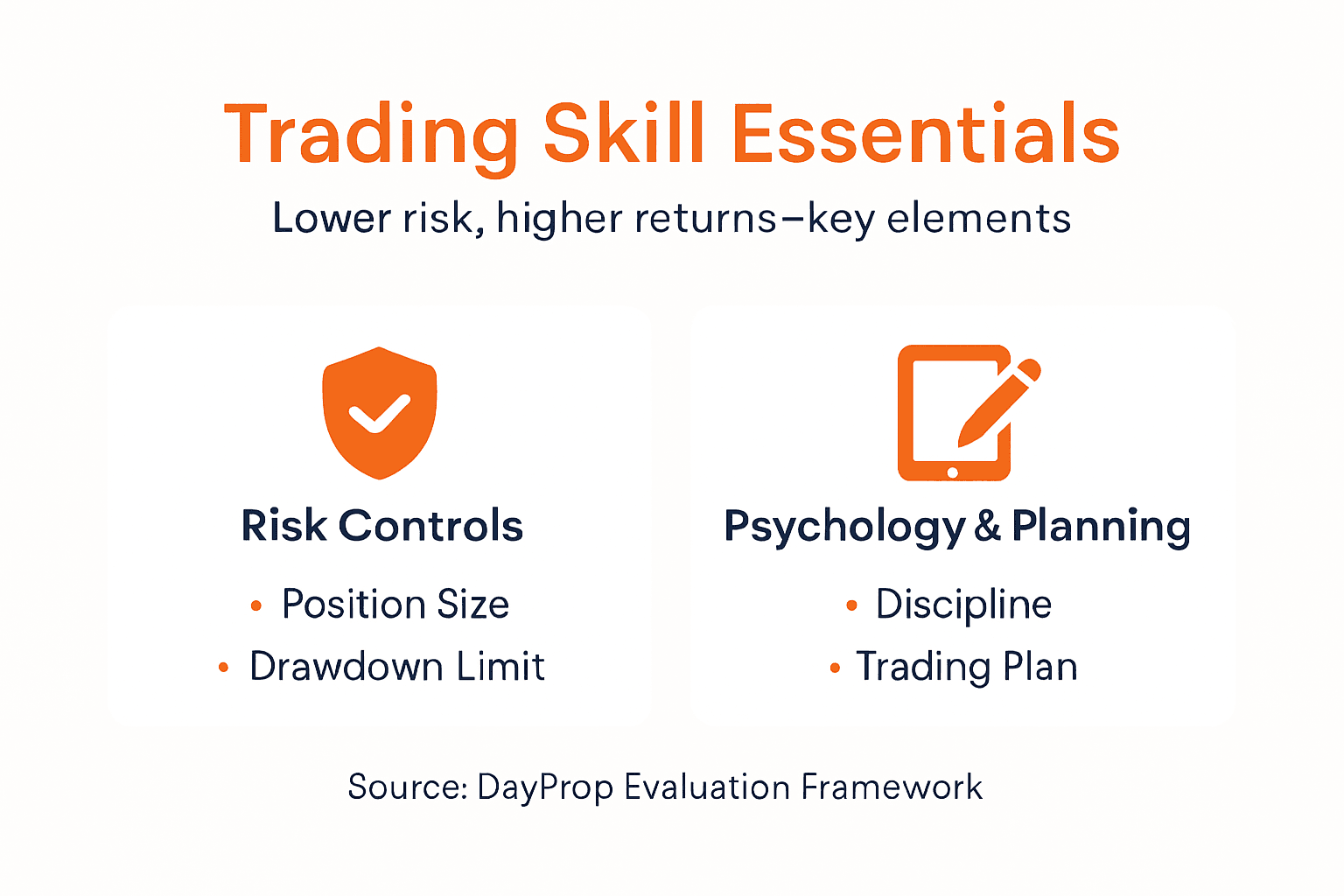
Real trading skill rests on three pillars:
- Risk Management: Fixed position sizing and stop losses that cap losses at 1-2% per trade.
- Psychological Discipline: The ability to follow your plan when emotions scream otherwise.
- Systematic Trading Plan: Repeatable entry, exit, and position sizing rules that create edge over time.
These components work together. Risk management protects your account during drawdowns. Psychological discipline keeps you from revenge trading or overleveraging. A systematic plan ensures your edge isn’t accidental. For more insights on building this foundation, explore the DayProp blog insights. Understanding the impact of algorithmic trading on investment also helps clarify how structured, rule-based approaches outperform discretionary hunches.
Core Components of Real Trading Skill
Risk management is the foundation. Proper position sizing limiting risk to 1-2% of account equity per trade reduces maximum drawdowns by up to 60%. This isn’t optional; it’s the difference between surviving bad streaks and blowing up accounts. Fixed fractional sizing ensures one bad trade never destroys your capital.

Psychological control amplifies returns. Traders who master emotional discipline reduce impulsive trades, increasing net returns by approximately 25%. When fear and greed dictate your decisions, you abandon your edge. Discipline means sticking to risk parameters even when the market tempts you to chase or panic. It means recognizing tilt and stepping away before losses cascade.
A structured trading plan enables repeatability. Your plan defines entry signals, position sizing, stop placement, and profit targets. This systematic approach creates a testable, improvable edge. Without it, you’re guessing and hoping. With it, you can review, refine, and scale your results. Emotional discipline supports this by preventing you from deviating during losing streaks or winning runs.
Pro Tip: Focus first on consistent risk controls before expanding position size. Growing capital safely requires proving you can protect it first. Master the 1-2% rule, then scale up once your metrics confirm skill. For detailed strategies on risk tips for 2026 prop trading, review the latest guidelines and apply them rigorously.
Each component reinforces the others. Strong risk management buys time for your edge to play out. Psychological control keeps you in the game during rough patches. A systematic plan gives you something concrete to follow when emotions run high. Together, they form the triad of real trading skill.
Common Misconceptions About Trading Skill
Many traders believe frequent trading signals skill. It doesn’t. Overtrading usually correlates with poorer long-term performance because transaction costs and emotional fatigue erode returns. Real skill often involves patience, waiting for high-probability setups rather than forcing trades.
Short-term success can be due to luck, and true skill is only validated through multi-month performance data. A winning week or even month doesn’t prove ability. The hot hand fallacy tricks traders into thinking streaks represent skill when they may just be variance. You need at least three to six months of data to separate signal from noise.
Here are the top misconceptions that mislead retail traders:
- More trades equal more profit: Overtrading increases costs and mistakes, often lowering net returns.
- Quick wins prove skill: Short-term streaks can be random luck; consistency over months is the real test.
- Trading is about guessing direction: Real skill is managing risk and emotions, not predicting price.
- Ignoring discipline is fine if results are good: Undisciplined wins mask risk; eventually, that risk catches up.
- Experience alone equals skill: Time in the market doesn’t guarantee edge; structured improvement does.
Correcting these misconceptions is essential for shifting towards disciplined trading. If you believe frequent trading or short-term wins define skill, you’ll optimize for the wrong outcomes. You’ll chase trades, overleverage, and ignore risk. Instead, focus on the metrics and behaviors that actually predict long-term success. For a deeper dive into performance-based evaluation, study how professionals assess trading ability beyond surface-level wins.
Measuring and Demonstrating Real Trading Skill
Quantitative metrics provide objective benchmarks. A Sharpe Ratio above 1.0, max drawdown below 5%, and win-loss ratio greater than 1.2 effectively identify skillful traders when combined with qualitative assessments. These numbers cut through subjective impressions and reveal whether your returns justify the risk you take.
Sharpe Ratio measures risk-adjusted return. A ratio above 1.0 means you’re earning more than one unit of return per unit of risk, a sign of efficiency. Maximum drawdown tracks the largest peak-to-trough decline, showing how much capital you risk losing during rough patches. Win-loss ratio compares average wins to average losses, indicating whether your edge is positive.
Quantitative data alone isn’t enough. Adherence to your trading plan, emotional consistency, and rule compliance matter just as much. A trader who hits good metrics by breaking rules is a ticking time bomb. Qualitative factors like discipline during drawdowns or refusal to revenge trade distinguish genuine skill from lucky outcomes.
| Metric | Skilled Trader | Novice Trader |
|---|---|---|
| Sharpe Ratio | >1.0 | <0.5 |
| Max Drawdown | <5% | >15% |
| Win-Loss Ratio | >1.2 | <1.0 |
| Rule Adherence | >95% | <70% |
| Emotional Control | Consistent | Erratic |
Pro Tip: Use trading evaluation platforms with built-in risk and performance monitoring to benchmark your skill objectively. Real-time tracking helps you spot deviations from your plan and correct them before they compound. For comprehensive evaluation guide for prop funding, explore structured challenges that enforce these metrics.
Demonstrating skill through evaluations increases your chances of securing institutional funding. Prop firms and evaluators look for these exact metrics because they predict long-term profitability. If you can show consistent results under professional risk parameters, you’re a candidate for capital.
How Proprietary Trading Evaluations Validate Skill
Proprietary evaluations simulate real market conditions under strict risk parameters. They enforce discipline and consistency, critical for demonstrating real skill. These platforms aren’t just tests; they’re training grounds that push you to stick to your plan under pressure. Transparent metrics help differentiate skilled traders from gamblers by tracking every trade against objective benchmarks.
Evaluation rules enforce risk parameters and consistency with transparent tracking that deters gambling; high pass rates on these platforms correlate with improved real-world trading results. When you know every trade is monitored and measured, you’re less likely to deviate. This accountability builds the habits that produce long-term success.
Passing evaluations aligns closely with qualification for institutional funding. Firms use these challenges to screen candidates because they reveal how traders perform under professional constraints. If you can hit profit targets while respecting drawdown limits and risk rules, you’ve proven you can handle real capital responsibly.
Key features and benefits of proprietary trading evaluations:
- Strict Risk Limits: Max daily loss and total drawdown caps prevent blowups and force disciplined sizing.
- Real-Time Performance Tracking: Instant feedback on metrics like win rate, drawdown, and consistency.
- Professional Trading Conditions: Spreads, execution speed, and market access mirror live funded accounts.
- Transparent Pass Criteria: Clear profit targets and risk thresholds remove guesswork and enforce accountability.
- Scalable Capital Opportunities: Successful traders gain access to larger accounts and scaling plans based on continued performance.
These features create an environment where real skill shines. Luck might carry you through a few trades, but it won’t last weeks or months under strict rules. For a step-by-step breakdown of the performance-based trading evaluation process guide, review how top platforms structure their challenges and what it takes to pass.
Applying Real Trading Skill to Secure Funding and Growth
Develop a structured trading plan including clear risk limits and strategy rules. Your plan should define maximum loss per trade, daily loss limits, position sizing formulas, entry and exit criteria, and review schedules. This structure turns abstract concepts like discipline into concrete actions you can measure and improve.
Use evaluation platforms to objectively benchmark and improve your skill. These challenges provide real-time feedback, helping you identify weaknesses before they cost you capital. Focus on consistent returns with low drawdowns to demonstrate discipline. Funding firms care more about steady 1-2% monthly gains than erratic 10% swings.
Here’s a step-by-step path from skill development to funding approval:
- Build a Trading Plan: Document your strategy, risk rules, and performance goals in writing.
- Backtest and Refine: Use historical data to validate your edge and adjust parameters.
- Demo Trade Under Evaluation Rules: Practice with strict risk limits to prove consistency before risking capital.
- Enter a Structured Evaluation: Apply to a prop platform that enforces professional risk parameters.
- Pass the Evaluation: Hit profit targets while respecting drawdown limits and adhering to your plan.
- Secure Funding: Receive capital allocation based on demonstrated skill and start scaling responsibly.
Pro Tip: Regularly review performance metrics and psychological state to avoid common pitfalls and sustain growth. Schedule weekly reviews of your trades, noting not just outcomes but emotional state and rule adherence. This practice catches small deviations before they become costly habits.
Leverage funded accounts to grow capital without risking personal funds. Once you pass an evaluation, you trade firm capital under professional constraints. This setup aligns incentives because your profits come from performance, not personal risk. For detailed guidance on how to secure prop funding and a comprehensive list of essential trading skills for funded traders, explore resources that map the entire journey from novice to funded professional.
Boost Your Trading Career with DayProp Funding
DayProp offers performance-based trading evaluations to help you prove real trading skill. Our structured challenges enforce risk discipline and consistency, aligning with professional funding standards that separate skilled traders from gamblers. We focus on real-world trading conditions in FX, indices, and crypto, giving you the tools to demonstrate edge and secure capital.
Join thousands of traders improving their results and securing funding through transparent rules and scalable growth opportunities. Whether you’re refining your strategy or ready to prove your ability, DayProp provides the platform and resources to advance your trading career. Explore our performance-based trading evaluation process guide and review the list of essential trading skills to master the evaluation process. Visit DayProp to start your journey toward professional funding today.
Frequently Asked Questions
What differentiates real trading skill from luck?
Real skill produces consistent, risk-controlled profits over multiple months, while luck generates random short-term wins. Skilled traders maintain low drawdowns and positive Sharpe Ratios, proving their edge is repeatable under various market conditions.
How long should I track performance to confirm skill?
You need at least three to six months of performance data to separate skill from luck. Shorter periods don’t account for market variance or emotional consistency. Longer tracking periods reveal whether your edge holds across different market regimes.
Which risk management practices best protect my capital?
Limit risk to 1-2% of account equity per trade using fixed fractional position sizing. Set maximum daily and total drawdown limits, typically 5% and 10% respectively. These practices reduce maximum drawdowns by up to 60% and prevent catastrophic losses during rough patches.
How do proprietary trading evaluations help traders?
Evaluations enforce strict risk parameters and transparent tracking, building discipline and accountability. They provide objective benchmarks that differentiate skilled traders from gamblers, and passing them qualifies you for institutional funding without risking personal capital.
Can I qualify for funding without consistent profits?
No. Funding firms require demonstrated consistency and adherence to risk rules. Even one-time large wins don’t prove skill if accompanied by high drawdowns or rule violations. You must show repeatable, disciplined performance over weeks or months to secure capital.
Recommended
- Grow Trading Capital: 70% Avoid Failure with 2-5% Returns – DayProp Funding
- Trading Account Growth: Pathways to Consistent Gains – DayProp Funding
- Prop Trading Risk Tips: 3% Drawdown Limits for 2026 – DayProp Funding
- 6 Essential Trading Skills Every Funded Trader Needs – DayProp Funding
- Trading Algorítmico: Impacto Real en Tu Inversión