

Most traders believe landing one massive winner defines success. That’s wrong. Data shows consistent 1-3% monthly returns compound to 253% over five years, crushing volatile boom-bust cycles that wipe accounts. This guide reveals why disciplined long-term growth beats speculation and how you can build sustainable profits that unlock funding opportunities.
Table of Contents
- Understanding The Importance Of Long-Term Growth In Trading
- Key Psychological And Behavioral Factors Supporting Long-Term Growth
Key takeaways
| Point | Details |
|---|---|
| Discipline drives survival | Risk management and consistency protect capital better than chasing quick wins. |
| Psychology matters most | Emotional control accounts for up to 70% of trading performance variation. |
| Compounding enables scaling | Steady monthly gains unlock institutional funding and account growth opportunities. |
| Avoid speculation traps | Short-term gambling behavior destroys more accounts than market conditions. |
Understanding the importance of long-term growth in trading
Short-term speculation feels exciting. You spot a setup, lever up, and hope for a moonshot. But frameworks emphasizing plan development, risk control, psychological preparation, and account scaling deliver higher sustainable returns than gambling on volatility spikes.
Here’s why long-term growth beats quick hits:
- Discipline and risk management keep you alive during drawdowns. Survival precedes profit.
- Compounding modest gains over months creates exponential account growth without blowing up.
- Psychological resilience develops when you endure normal market swings instead of panic-exiting.
- Scalability becomes possible once you prove consistent performance metrics to funding platforms.
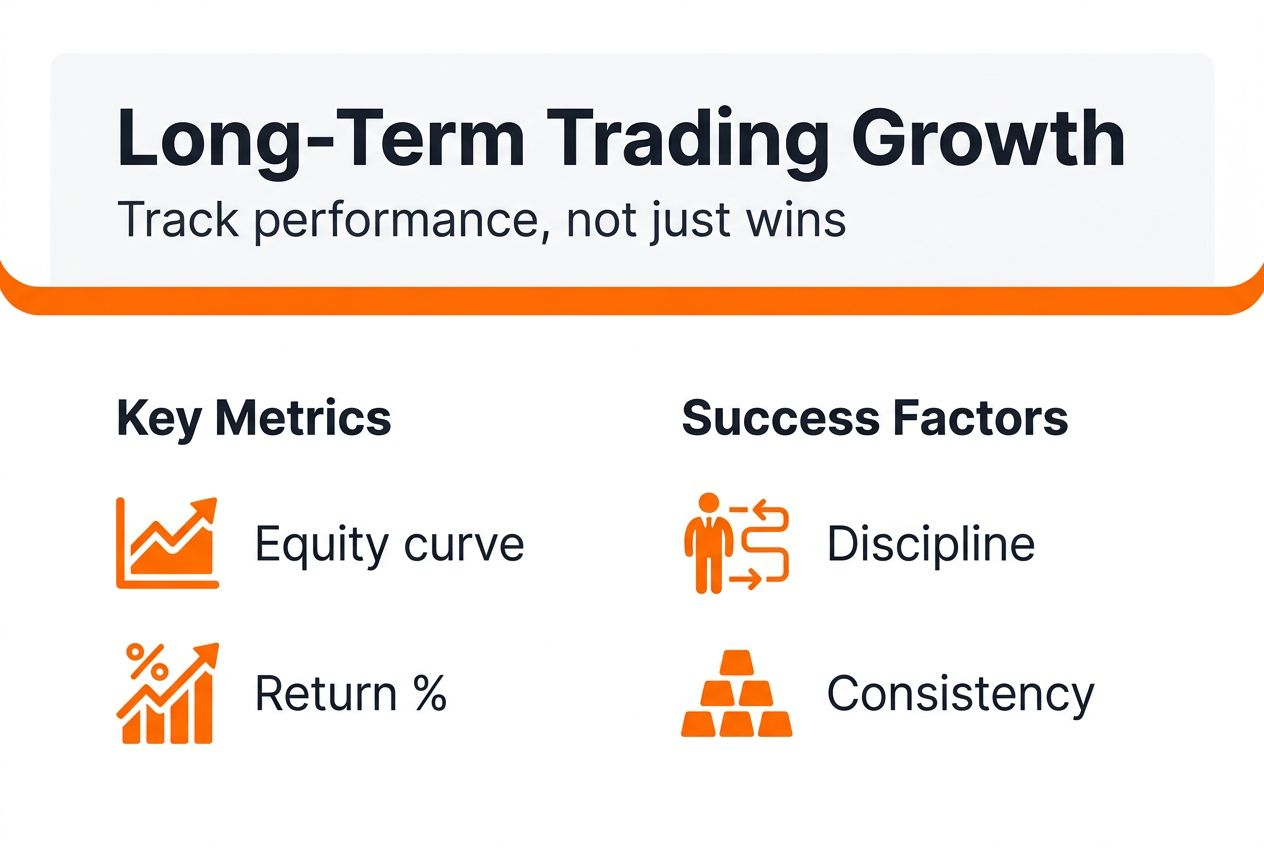
The long-term growth importance concept applies across markets. In trading, it means building equity curves that trend upward over quarters and years, not erratic spikes followed by catastrophic losses. Retail traders often confuse activity with progress, trading constantly without strategic direction.

Pro Tip: Track your monthly return percentage instead of dollar gains. A $500 win on a $10,000 account (5%) beats a $1,000 win on a $50,000 account (2%) for growth rate comparison.
Key psychological and behavioral factors supporting long-term growth
Your mindset determines whether you survive year one or blow up trying. Emotional control separates funded traders from account churners. When you hit a losing streak, fear whispers
Recommended